
Govt seems to bullish to meet its disinvestment target in current fiscal.

Sources said valuation of all these assets was an ongoing process, and the mode and manner of disposal would be decided on a case-by-case basis
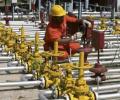
Finance Ministry is considering to sell 5 per cent stake in ONGC in the current fiscal, which could garner about Rs 17,000 crore to the exchequer.

The Centre's push to sell Air India on priority has led to delays in other strategic divestment proposals, such as privatising United India Insurance, as well as ongoing transactions, such as Shipping Corporation of India (SCI) and Bharat Petroleum Corporation (BPCL), revealed multiple officials involved in the process. The Department of Investment and Public Asset Management (DIPAM) is yet to take new privatisation recommendations of the NITI Aayog to the core group of secretaries on disinvestment (CGD) headed by the Cabinet secretary, said one of the officials. The priority now is to ensure all approvals for Air India are in place since the government intends to hand over the national carrier as early as this month.

To meet the revised estimates for 2019-20, the central government will have to garner Rs 5.03 trillion in total revenues in March, which has seen the worst phase of the coronavirus pandemic so far and the resultant lockdown.

A tightrope walk ahead, especially as govt's fiscal deficit has already reached 99% of full-year estimates
Arun Jaitley addressed a post-Budget press conference.

Post-sale, the government stake would be 75 per cent, which will help NTPC to comply with the minimum public shareholding norms.

Breaking a long tradition, the PMO has ensured that specific divisions in each ministry are allocated to junior ministers.

Just five days after mandating all listed companies to have a minimum 25 per cent public float, the government said on Wednesday indicated it was open to a review of the new rules. "If there is need for any modification, correction, amendment, or may be amplification, it will be done," Finance Secretary Ashok Chawla told reporters on the sidelines of a function by the Confederation of Indian Industry.
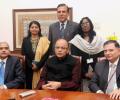
Senior New Delhi-based journalist R Rajagopalan, who has been closely following the Union Budget preparations since 1977, lifts the veil off India's most secretive operation.
Failure to sell Air India, IDBI may have prompted a change in strategy.

The government is looking to sell shares of Reliance Industries (RIL) held through Specified Undertaking of the Unit Trust of India (SUUTI) and is soon going to appoint an intermediary to manage it. The plan is to sell about 8 lakh shares of RIL that will help the government garner around Rs 180 crore. The Department of Investment and Public Asset Management (DIPAM) will appoint an intermediary that will act as a custodian of these shares. The intermediary, based on its market analysis, will offload these shares at the best price, said an official. A final approval on the proposal is expected soon.

The Central Bureau of Investigation on Thursday night arrested a Mumbai-based chartered accountant and two government officials for allegedly selling confidential documents related to foreign investment policy to corporate groups after it carried out searches in offices of Finance and Commerce Ministries in New Delhi and in Mumbai.

The New Year 2015, however, may see shares worth over Rs 50,000 crore (Rs 500 billion) being put on the table by the government, including by way of part-sale of its holdings in PSUs and its residual minority stakes in some private sector entities.
Last week, the government had introduced a fresh round of austerity measures, including bans on first class travel, creation of new posts and holding meetings in five-star facilities.

The government is also planning to replace the current ageing Air India One or Boeing 747 with Boeing 777s. Arup Roychoudhury and Archis Mohan report.

Over two lakh posts are estimated to be created by the Central government in its various departments.

The government on Friday cleared disinvestment in two bluechip state-owned companies IOC and Bhel, which would fetch over Rs 7,300 crore (Rs 73 billion) to the exchequer in the current fiscal.
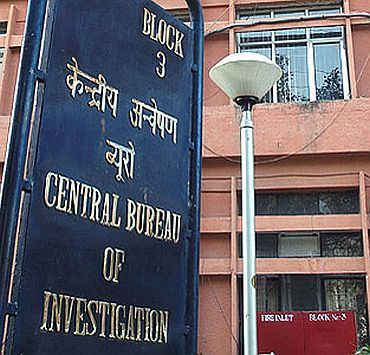
Probe reveals "first and second" level of decision making in ministries of finance and commerce was "compromised".

The divestment of Bharat Petroleum Corporation (BPCL) may hit a fuel price hurdle, according to officials dealing with the matter. They pointed out that the inconspicuous administered price regime could hamper the prospects for potential buyers of BPCL. A senior oil ministry official said public-sector oil-marketing companies (OMCs) take a hit when they sell petrol, diesel, and liquefied petroleum gas (LPG), three of the most popular petroleum products in the country.

The government on Monday signed the share purchase agreement with Tata Sons for the sale of national carrier Air India for Rs 18,000 crore. Earlier this month, the government had accepted an offer by Talace Pvt Ltd, a unit of the holding company of the salt-to-software conglomerate, to pay Rs 2,700 crore cash and take over Rs 15,300 crore of the airline's debt. Following that, on October 11 a Letter of Intenet (LoI) was issued to the Tata Group confirming the government's willingness to sell its 100 per cent stake in the airline.

Initiated move to privatise Air India, but reports on poverty and cast census remained unfinished

This was the one Budget that required radical departures on all these fronts, when it had none, asserts, Shreekant Sambrani.

By castigating the reforms themselves because of the remediable and reversible defaults here and there in carrying them out, Yashwant Sinha is throwing out the baby along with the bath water, says B S Raghavan.

Assocham said even if an investment revival were to happen, it would be a time lag of at least 18 months before it reflects in the manufacturing sector.

Rumours about a spike in taxes for equity investors are flying thick and fast.

Despite crude comfort, heavy spending cuts needed to offset Rs 80k-cr revenue shortfall
Indeed, this is one policy area where the Modi-led government is different from the one that was headed by Atal Bihari Vajpayee.

Single window clearances for realty must.

Private sector firms need to be re-engaged for better infra planning.

Sectors throw up a wishlist for the Finance Minister.

In a Q&A with Doordarshan, Jaitley discusses how he chose the areas on which he would spend more.

Modi government has to come up with a robust economic agenda to impress the masses.

Indian economy about to take-off
 © 2026 Rediff.com - Advertise with us - Disclaimer - Privacy Policy - Sitemap - Feedback - About us - Terms of use - Grievances